Pasteurization vs UHT: How to Choose Milk Heat Treatment for Your Market
The choice between pasteurized and UHT milk is decided by your distribution chain, not your budget. A practical guide for new dairy plants.
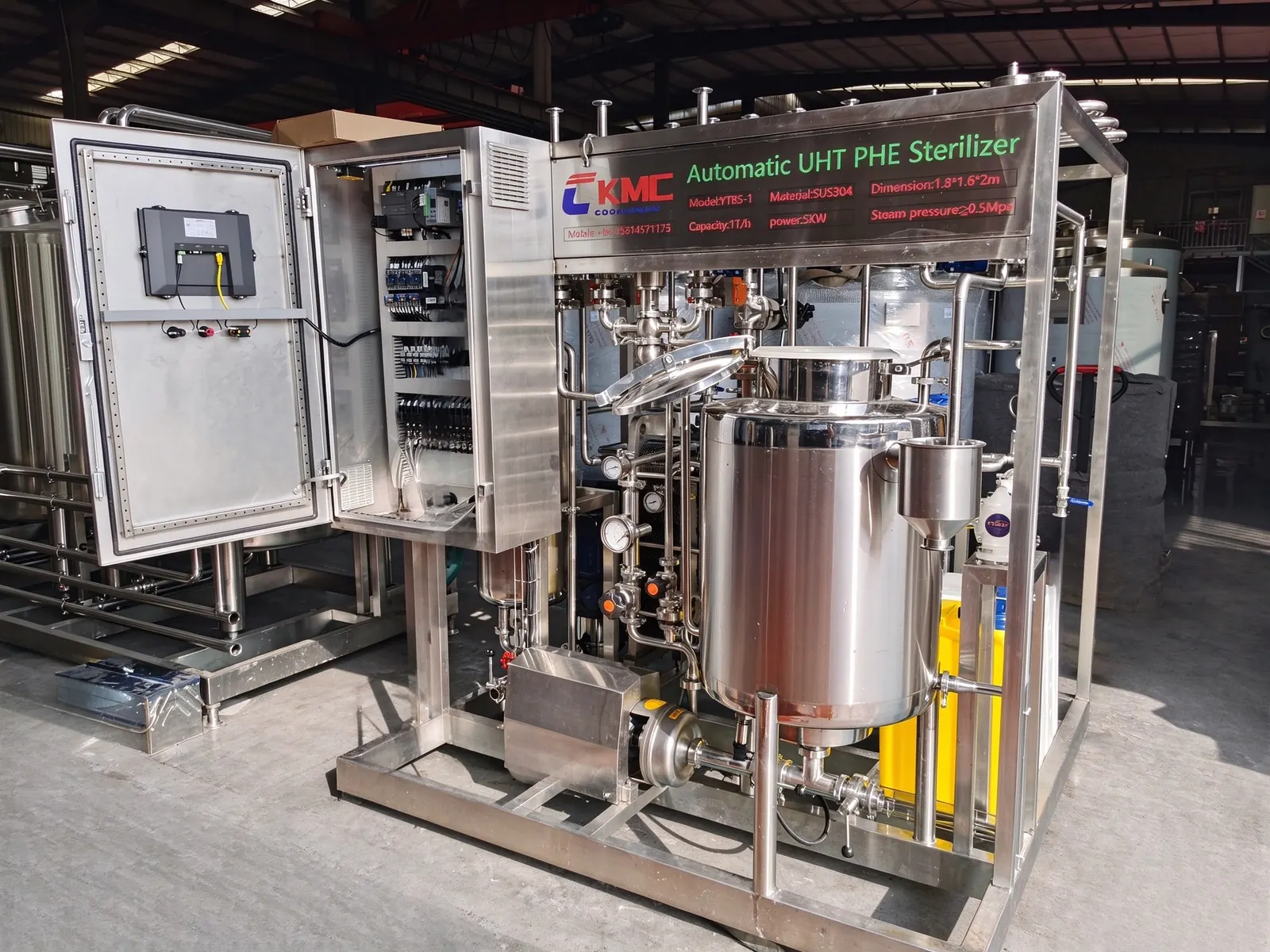
A continuous plate heat treatment system for milk and similar liquid dairy products.
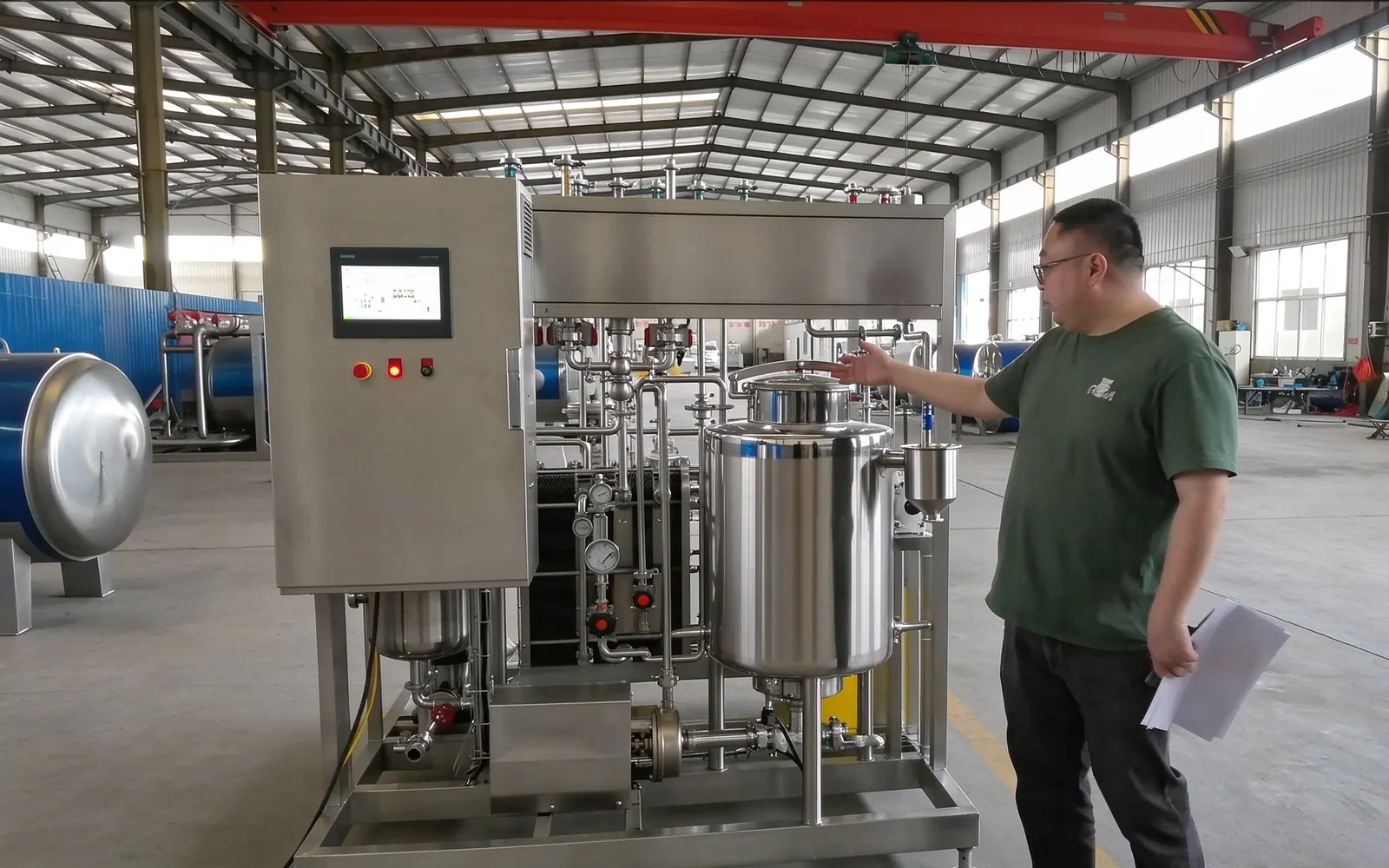
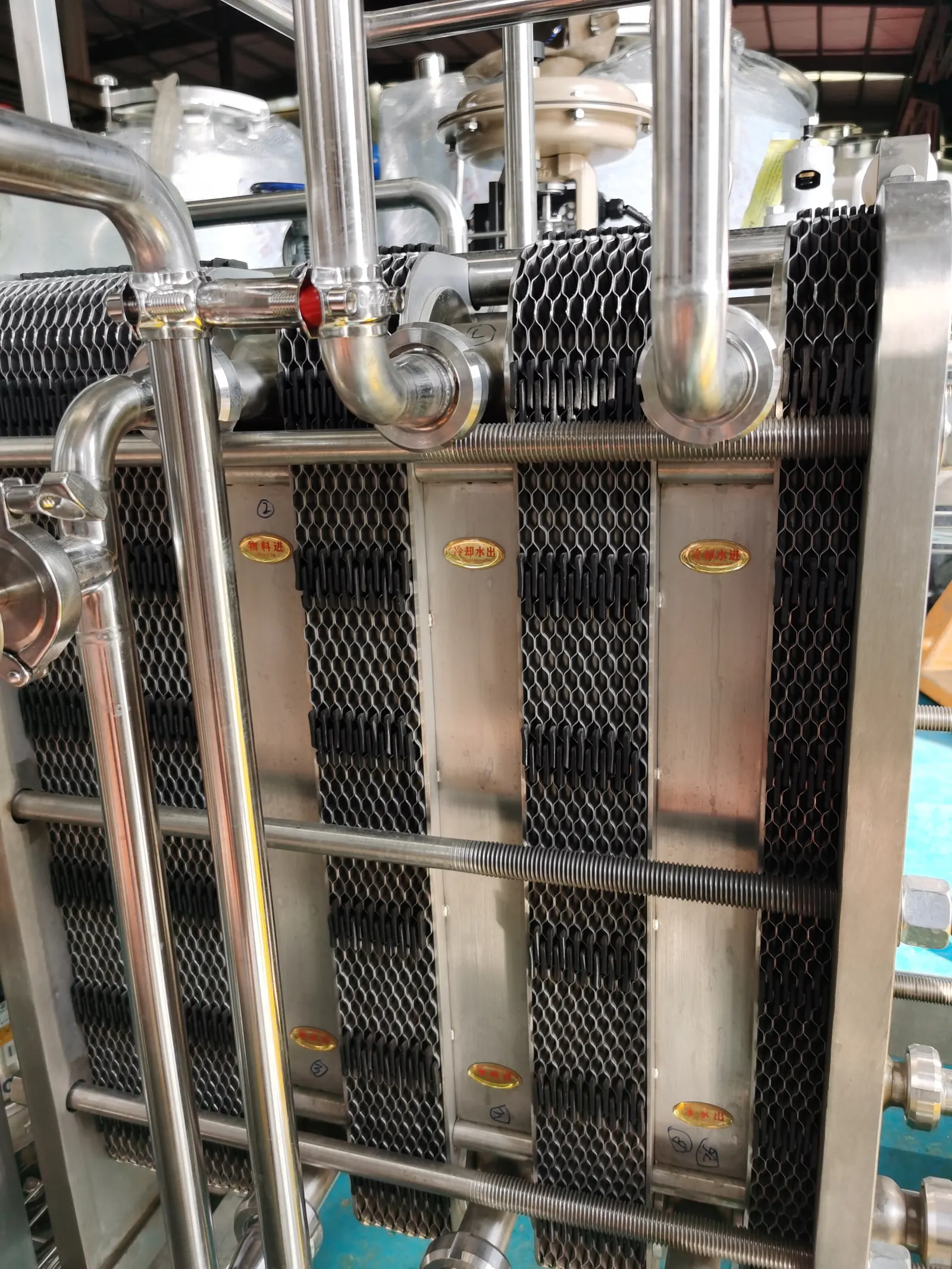
A continuous plate heat treatment system for milk and similar liquid dairy products. Product flows through a plate heat exchanger where incoming cold milk is warmed by outgoing hot milk, then through the heating and holding sections, and back through regeneration on the way out.
Regeneration is what makes a continuous system cheaper to run than a batch vat at steady volume: much of the heat put into the product is recovered from it again on the way out, so both the heating and the cooling load fall.
Six models cover 1,000 to 10,000 litres per hour. Steam consumption scales with capacity and is listed per model in the table below — the figure to check against your boiler before ordering rather than after.
Less suitable for: Very small volumes, and operations changing product several times per shift where changeover and cleaning would exceed production time.
| Model | Capacity | Steam consumption | Installed power | Dimensions (L×W×H) | Weight |
|---|---|---|---|---|---|
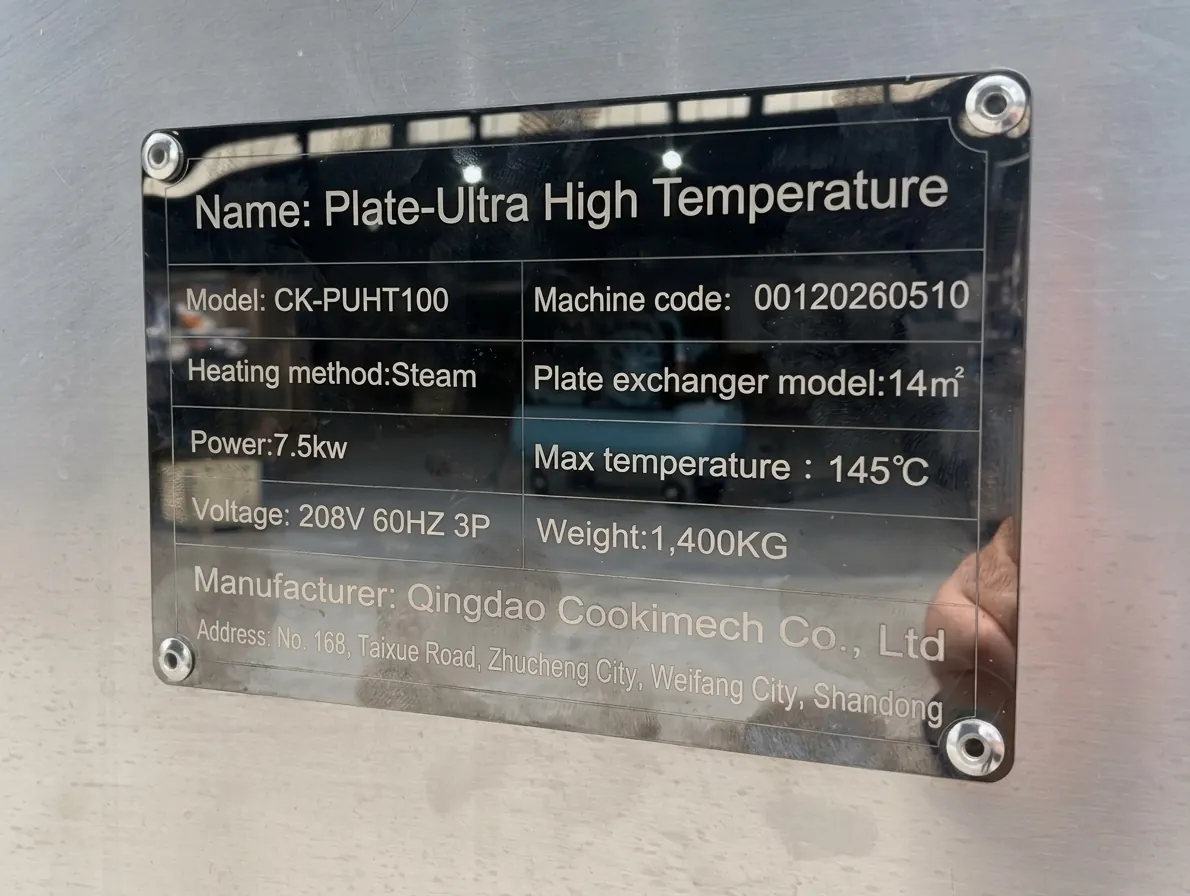
| UHT-1000 | 1,000 L/h | 220 kg/h | 7 kW | 1800 × 950 × 2000 mm | 1,400 kg |
| UHT-2000 | 2,000 L/h | 400 kg/h | 9 kW | 1900 × 1050 × 2100 mm | 1,700 kg |
| UHT-3000 | 3,000 L/h | 600 kg/h | 7 kW | 1950 × 1100 × 2100 mm | 2,000 kg |
| UHT-5000 | 5,000 L/h | 1,000 kg/h | 7 kW | 2300 × 1300 × 2200 mm | 2,500 kg |
| UHT-8000 | 8,000 L/h | 1,600 kg/h | 7 kW | On request | On request |
| UHT-10000 | 10,000 L/h | 2,000 kg/h | 7 kW | On request | On request |
Steam consumption is proportional to capacity at 0.2 kg of steam per litre across the range. All contact parts SUS304.
Heating is by steam. Steam consumption per model is listed in the specification table — check it against your boiler capacity before ordering, since retro-fitting boiler capacity is far more disruptive than sizing it correctly at the start.
Voltage and frequency are specified per order. Motors and control components are selected accordingly.
Voltage options: 380 V / 50 Hz · 220 V / 60 Hz · 415 V / 50 Hz · 440 V / 60 Hz · Other supplies on request
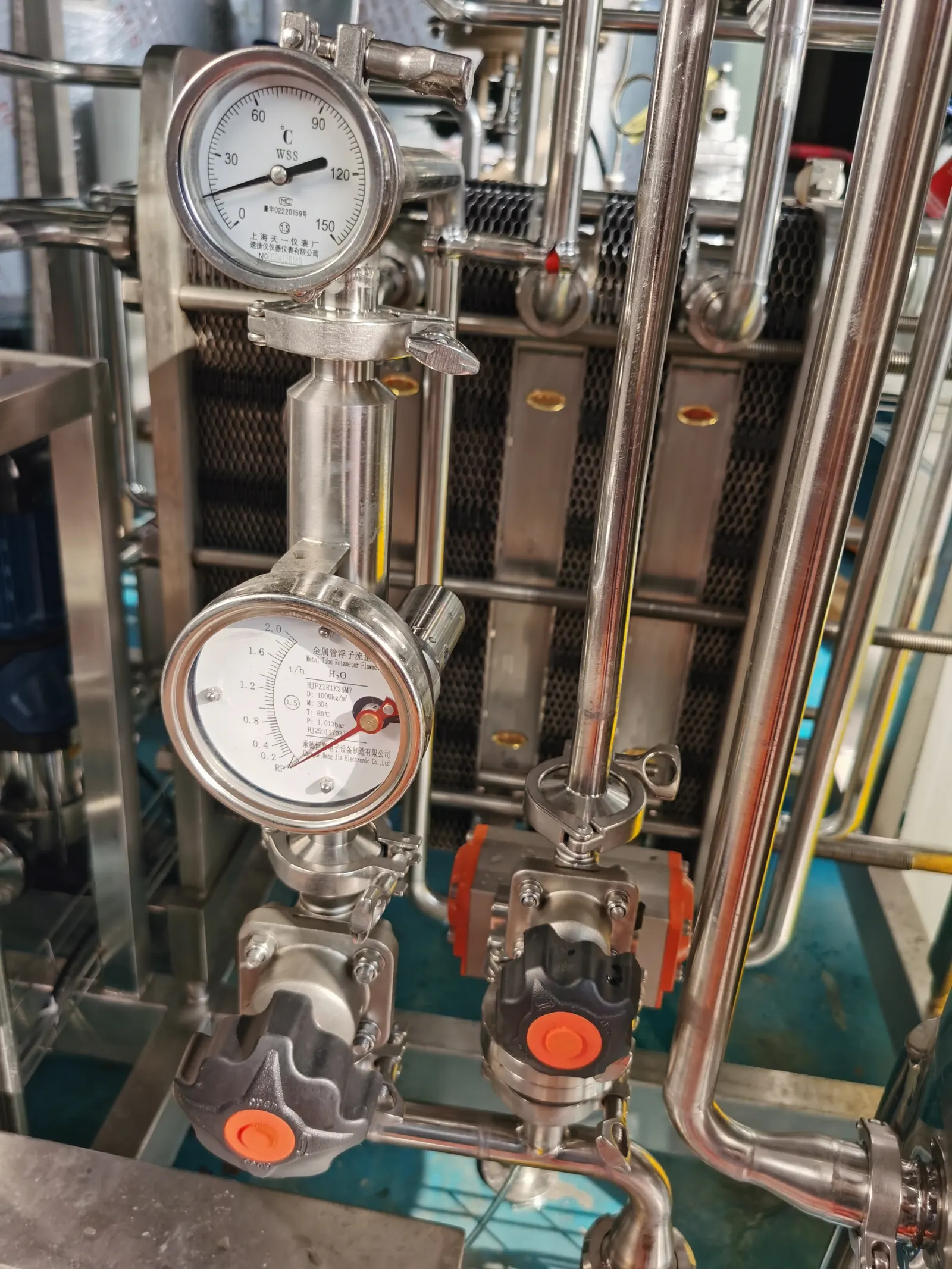
Control components are Siemens as standard. If your maintenance team and your local supplier already work with a different platform, we build to the brand you specify instead — Schneider, Mitsubishi and others can be quoted.
This matters more than it looks. A control fault on a line running perishable product has to be resolved the same shift, and that is far easier with a part your local distributor holds than with one shipped from China. Tell us your preference at the enquiry stage and we will quote accordingly.
| Option | When it makes sense |
|---|---|
| Automatic temperature recording | Required in some markets and requested in most commercial audits |
| Additional cooling section | Where chilled water is limited or the final temperature must be lower |
| Integrated CIP skid | Where no central CIP system exists |
| Specified control brand (Schneider, Mitsubishi or other) | Where your maintenance team and local suppliers already work with one platform |
Send your daily volume and your site conditions. We will recommend a model and explain the reasoning — including a smaller machine than you asked for, if that is what makes sense.
The choice between pasteurized and UHT milk is decided by your distribution chain, not your budget. A practical guide for new dairy plants.
CIP is the equipment most often bought too small. How to size tank volume, flow and the number of tanks from your circuits and cleaning window.